What Makes Homes Suitable for Termites
Frederick has older homes in the Frederick Historic District as well as newer housing. Foundation details and access to soil can differ from house to house. Carroll Creek Linear Park is a local landmark, but property conditions—not proximity—guide the inspection.
A Frederick lot near Route 15 may have paved edges, planting beds, or narrow foundation access. Those features can affect where an inspection or soil treatment can reach. Baker Park is another local reference point; neither landmark establishes termite activity at a home.
A ranch or split-level in Frederick calls for an address-specific answer, since service reach can vary across Frederick. Share your location with the pros we connect you with to learn whether they cover your property and can assess its conditions.
Wood and Hidden Structural Changes
- SPECIES CHECK
- Mud tubes, wings, or damaged wood can prompt inspection, but those signs alone do not confirm Formosan termites.
- HOME REVIEW
- A liquid soil treatment depends on access to the relevant route; paving or concealed sections may limit placement.
- LIQUID ROUTE
- Liquid termiticide can establish treated zones; bait depends on station placement and termite contact, with follow-up needed to judge activity.
- BAIT TRACKING
- Treatment targets termite activity. Damaged framing may need a separate evaluation and repair.
- ACTIVITY WINDOW
- A ranch near Carroll Creek may suit a treated soil zone where access allows; bait stations can track feeding, but need repeat checks and may miss concealed damage.
- Service Terms
- Rain and watering can change soil moisture near a foundation, while dry spells do not prove activity has ended. In Frederick, use inspection findings and scheduled monitoring to track whether signs persist and whether conditions have changed.
- Access Needs
- an estimated $600–$1,800
How On-Site Review Resolves Uncertainty
Subterranean termites. A Formosan infestation and other subterranean activity may both leave signs near a foundation, making the visible evidence easy to misread. In Frederick, identification depends on the full inspection, not one clue. Discarded wings may point to swarming activity, but they do not by themselves distinguish termite types. Mud tubes and foundation routes support a different picture than activity confined to wood. Signs alone may not settle identification.
Household Precautions During Treatment
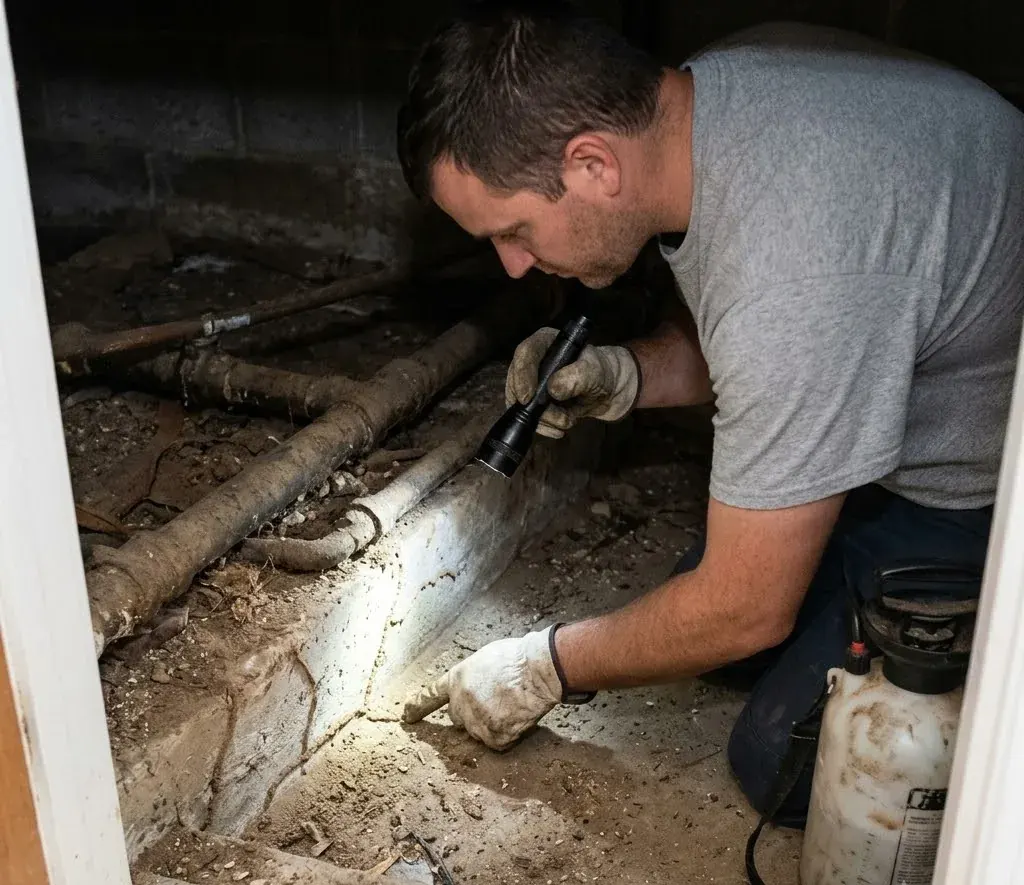
The provider first checks the identification, accessible foundation edges, wood, and signs of current activity. If soil routes can be reached, a labeled liquid termiticide may create treated zones there. Paving or hidden access can limit placement, so the provider should document which areas were treated and which were not.
Where inspection supports baiting, the provider places stations near relevant activity and records their locations. Stations need ongoing checks, and access must remain clear. Localized treatment may address a defined area, but its scope should be stated plainly. Neither approach removes existing wood damage.
Your inspection notes should distinguish completed work from conditions needing another look. If activity needs observation, the plan should name the next check and its purpose. Where the agreed treatment resolves the stated issue, confirm whether service ends there. Review written terms to see what follow-up includes and what triggers more work.
WHAT A TERMITE REVIEW FINDS BESIDE LATER ACTIVITY CHECKS
| Written Scope |
Findings Set the Course |
|---|
| Early activity limited to one section | Repair needs |
| Termite traces surface after prior work | Wood clearance |
| Reports from several parts of the house | Treatment steps and station access covered |
MARYLAND PEST OVERSIGHTConfirm that the person applying treatment holds the required credentials. Ask the provider for a written scope naming the products, treatment areas, monitoring terms, and any separate repair work. Product use must follow its label.
Interior Framing And Finish Damage
As termites feed, wood members can lose strength, including inside walls where damage is hard to see. Continued feeding may mean damaged framing or trim needs closer evaluation and repair after treatment. Keep treatment findings and repair recommendations separate in the written record.
Track Changes Around Wood
Keep people and pets clear of suspected activity, and leave tubes, wood, and bait stations undisturbed. Do not spray household pesticide or open walls to follow a suspected route. Record changes in visible signs so you can describe the pattern during an inspection.
Household Preparation Before Inspection
Termites are mainly a property concern because feeding can weaken wood; they do not usually pose a direct household health hazard. Treatment products still need careful handling. Tell the provider about anyone in the home with sensitivities before treatment is planned. Ask which areas must remain clear and when occupants may return.
Compare the Factors in a Termite Estimate
Request a written breakdown from the pros we connect you with, showing which areas need work and what each part of the plan includes.Frederick’s guide range gives a starting point for the treatment work described; difficult access, added areas, monitoring, and wood repair can change what is included. The inspection charge and final written scope are confirmed with the pros we connect you with. Near Urbana or New Market, ask which findings shaped the proposed work.For cost factors, open pricing guide; Subterranean Termite Treatment describes how inspection findings shape treatment choices and follow-up monitoring.